A few years ago, Dave the Data Scientist (my husband), dropped some new-to-me business vocabulary into one of our conversations: individual contributor. After all my years of work, spanning levels, industries, functions, and the globe, I’d never heard those two words paired together. The context was: he was talking about his career and lack of desire to ever become a manager. Instead, he sought a career path of technical growth, allowing him to continue doing “cool data science stuff” (whatever that means) as an individual contributor.
This conversation lit an “aha” in me. For a long time, I’d deeply studied and practiced the difference between being a lead vs manager. Yet, I hadn’t ever contemplated that some (excellent, BTW) performers want to remain an individual contributor. Which led me down a path of more study and learning in action, until I was finally able to articulate: What is an individual contributor vs lead vs manager? And how does each one intersect with the other?
Why Vocabulary Matters
Shared language creates clear expectations and minimizes misunderstanding. When you know exactly what a role entails, you can set goals, evaluate performance, and develop people more effectively. This is especially important in creative small business teams because every seat is high-leverage – for good and for bad. The leap from doing, to leading, to managing, can make or break the business growth.
Plus, job titles often come with ego and assumptions (HUMANS. Am I right?). By separating titles from responsibilities, and using a shared language, we can align on what success actually looks like.
And before I get into each, I want to state an important thruline upfront: one is not better than the other. Each person should manage their own career in a personalized way for them. They shouldn’t blindly pursue going “higher,” hierarchically.
1. What is an Individual Contributor (IC)?
An individual contributor is responsible for delivering results through their own work. They are not formally responsible for managing other people.
Key Traits & Skills:
- Strong execution and reliability
- Follow-through and personal accountability
- Technical or service expertise
- Strong communication (especially to manager, teammates, and client/vendors if applicable)
- Emotional intelligence to navigate their learnings in the job, relationships, etc.
Note:
In the Ellevated Outcomes universe, successful ICs should also embody leader qualities. In client-facing businesses, especially those where the owner is no longer the bottleneck to growth with Ellevated Outcomes’ help <wink wink>, ICs are not just “doers;” they do work that requires them to be trusted guides within their area of expertise.
This means taking initiative, communicating proactively, and creating a sense of trust, internally and externally. You can’t lead a client through a decision or a transformation without presence, personal gravity, and credibility. These are leadership behaviors and a great example of the first intersection of individual contribute vs lead.
2. Lead
A lead is someone who steps into leadership (ideally, without being asked) via informal influence over others, internally and/or externally. They do not necessarily have people management responsibilities. This is an important distinction between lead vs manager. One of my biggest pet peeves is when people interchange the words leader and manager; they’re not the same!
As my friend, mentor, and sponsor Annmarie Camp says:
Leadership is the act of being followed.
Key Traits & Skills:
- Takes ownership of cross-functional or small team efforts
- Guides and mentors peers or junior team members
- Serves as the go-to person in their area of expertise
- Models company values, standards, and expectations all the time, because they know that others are watching and taking cues from them
- Communicates upward and across, effectively
A lead may not manage people on paper, nor have a call-out box on the org chart. But they’re leading by example, influence, or initiative. That’s the bridge to management.
Note:
Someone may desire to stay in an IC –> Lead position forever, growing their career with technical depth, substance, and influence (like Dave). This is a great growth path for that individual and certainly a standalone career.
Then, others may want to parlay this into management. So, what’s a lead vs manager?
3. Manager
A manager is accountable for others’ results. They lead a team, manage and allocate resources, develop talent, and ensure outcomes are achieved by orchestrating and holding others accountable to their actions and outcomes. They’re no longer solely executing their own work.
Key Traits & Skills:
- Anticipatory thinking and proactive problem-solving
- Coaching and developing people
- Organization, orchestration, and building systems that scale
- Emotional maturity, self-awareness, and egolessness
- Managing up, down, and across with exceptional communication and feedback skills
Note:
The most common mistake I see is promoting a high-performing IC – or even a solid mid-level manager – into a high-level management role before they’ve developed the leadership skills to truly hold that seat. Often, the person is an incredible master of task or project execution, but they haven’t yet developed the emotional maturity, communication skills, or self-awareness required to lead others at scale.
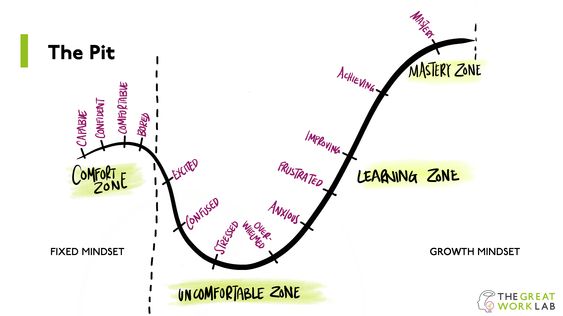
BTW: this was me in my late 20s/early 30s too. So there’s no shade here – just an observation. And it’s nearly impossible to teach this, but it can be learned through experience (via intense learning pits; lots and lots of learning pits).
Our beloved Jon Dalman of Mesa recently said something about management that I’ve repeated countless times on his behalf. It’s so brilliant and spot-on:
Being a manager is a deeply creative job; it requires seeing a gap or a need and proactively, creatively solving it.
With the rise of automation and AI, administrative management is fading. Straight up: it no longer adds value. In its place, what’s rising in value?
Creative, emotionally intelligent, proactive management.
So How Do These Roles Layer Together?
Think of these three roles as a progression of scope, not value. Every business needs ICs, Leads, and Managers to thrive. Here’s how they build on each other:
| Role | Primary Focus | Contribution Type | Core Skillset |
| Individual Contributor | Executing work | Personal output | Expertise, communication, initiative |
| Lead | Guiding others | Influence + output | Mentorship, modeling, initiative |
| Manager | Accomplishing the business’s goals by motivating + developing teams | Orchestration of others’ output | Anticipatory thinking + action, feedback, systems |
You can be a leader without being a manager, but you cannot be a manager without being a leader.
Final Thought
If you’re building a small business, or growing your team, the most powerful thing you can do when it comes to your people is define the difference between doing, leading, and managing – and make the space for growth paths, accordingly.